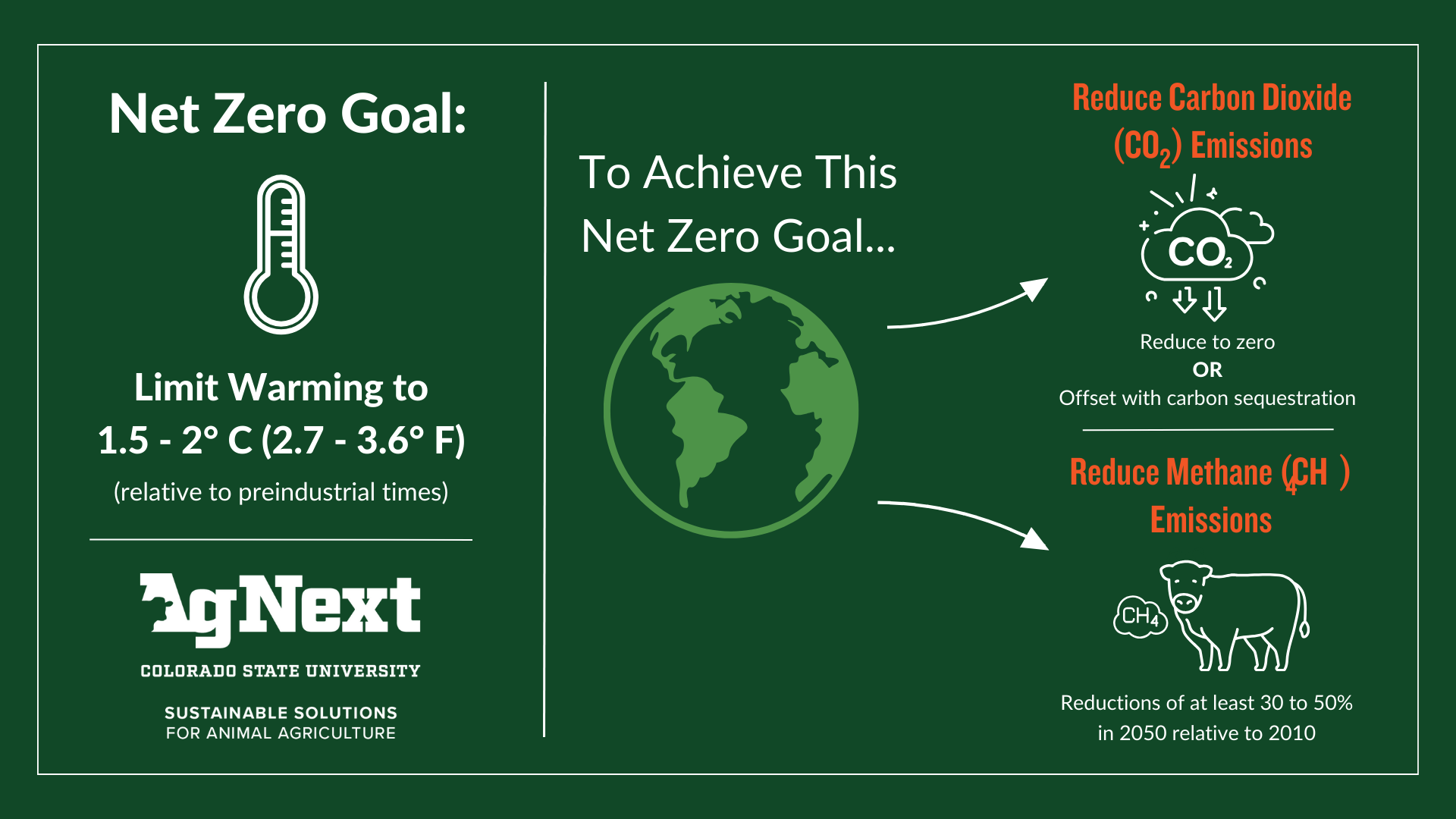
At AgNext, one of our primary goals in the realm of sustainable animal agriculture is to help achieve Net Zero. Net Zero is the balance between greenhouse gas emissions and reductions in order to stop warming of the climate. We use technology such as the GreenFeed machines at our Climate-Smart Research Facility to measure current emissions from cattle so we can work towards solutions to lowering those emissions.
What is Net Zero?
Essentially, Net Zero is the point at which the climate reaches zero warming. In order to keep the climate within a certain temperature range to prevent warming, greenhouse emissions such as Methane and Carbon Dioxide need to be reduced or offset. Carbon Dioxide emissions need to either drop to zero or balance out with removals.
The agriculture industry is striving to achieve Net Zero goals through methods such as researching how different feed additives affect greenhouse gas emissions from cattle. Another rising program for businesses to incorporate in their Net Zero pursuits is Carbon Markets.