
In January 2025, AgNext researchers, in collaboration with industry and academic partners, published a manuscript in the Journal of Veterinary Sciences titled, Effects of Production System With or Without Growth-Promoting Technologies on Growth and Blood Expression of (Cyto)Chemokines and Heat Shock and Tight Junction Proteins in Bos taurus and indicus Breeds During Summer Season. This study examined how the summer season affected blood proteins related to heat stress and immunity in Angus and Brahman cattle raised with or without growth-promoting technology (TRT).
Research Scope
The study addressed three key challenges:
- Climate change and heat stress: Increasing heatwaves negatively impact cattle health, productivity, and welfare, which has social and economic implications for the sustainability of beef cattle production systems.
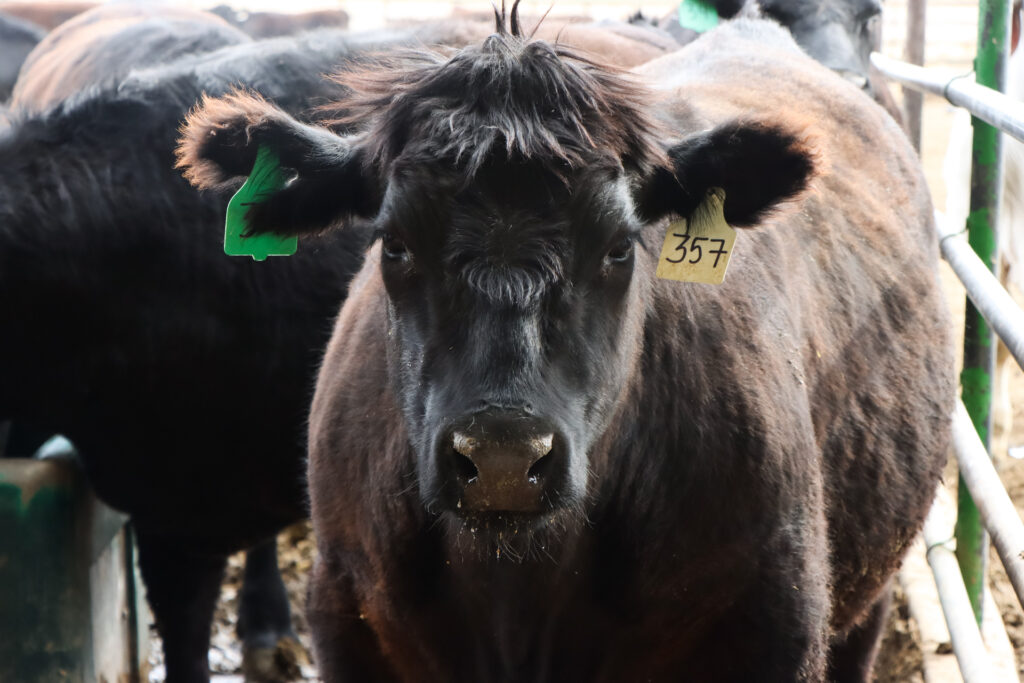
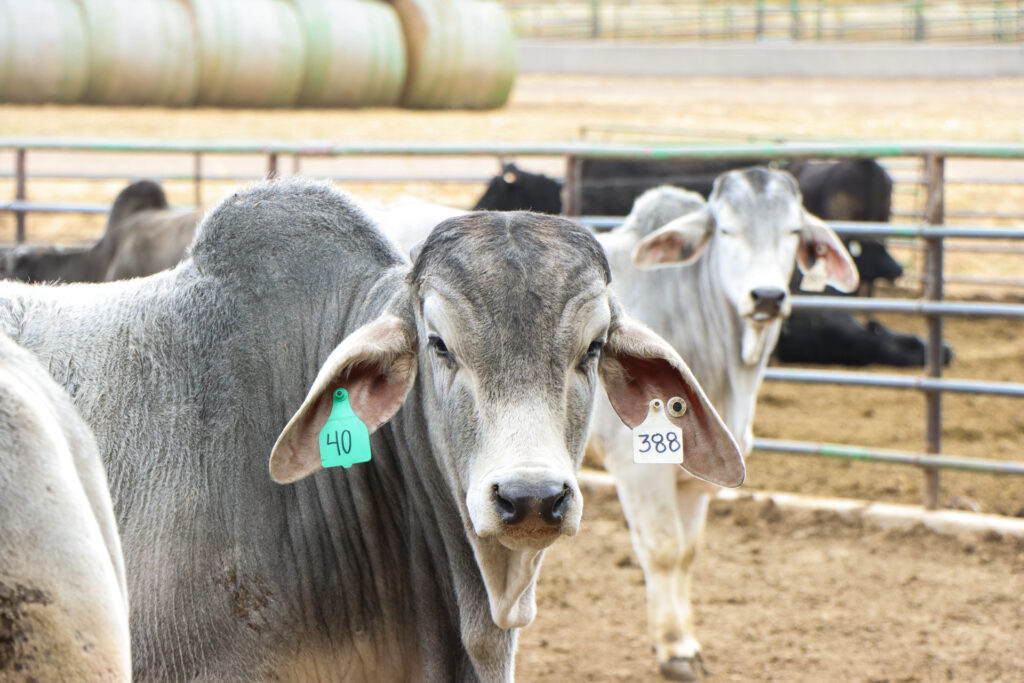
- Breed differences: Angus (Bos taurus) cattle grow quickly and efficiently but are heat-sensitive, while Brahman (Bos indicus) cattle are more heat-tolerant.
- Need for biomarkers: Non-invasive measures of heat stress could improve cattle management and genetic selection.
Researchers compared Angus (heat-sensitive) and Brahman (heat-tolerant) steers managed with (TRT) or without (CON) growth-promoting technologies during a 180-day summer feeding period in Colorado. To learn more about some of the physiological differences between Angus and Brahman cattle, read this blog. Blood samples were used to evaluate stress-related molecular markers: heat shock proteins, cytokines, chemokines, and tight junction proteins.
Key Terms:
- Heat shock proteins: Stress-response proteins that protect cells by stabilizing, folding, and transporting other proteins.
- Cytokines: Immune messengers that regulate inflammation, cell growth, and tissue repair.
- Chemokines: A subset of cytokines that direct immune cell movement to sites of inflammation, infection, or injury.
- Tight junction proteins: Structural proteins that maintain barrier integrity in tissues, regulate molecule passage, and influence immune responses.
Key Findings
- Growth performance: Angus steers gained more weight and had greater hot carcass weights than Brahman steers. Growth-promoting technologies further improved performance, especially in Angus steers.
- Heat shock proteins: Heat Shock Protein 70 (HSP70; HSP1A1) was upregulated in cattle without growth-promoting technologies, while Heat Shock Protein 90 (HSP90) was downregulated, potentially indicating that different roles in stress response exist despite both proteins being vital molecular chaperones involved in maintaining cellular homeostasis under stress conditions.
- Cytokines & chemokines: Angus steers showed greater baseline expression of Interleukin-10 (IL-10, an anti-inflammatory cytokine) and C-C motif chemokine ligand 20 (CCL20), demonstrating enhanced immune response compared to Brahman steers.
- Tight junction proteins: Angus steers had greater Claudin-1 (CLDN1) expression than Brahman steers, which is a protein that plays a critical role in maintaining the integrity of tight junctions.
Applications
- Non-invasive biomarkers: Stress-related biomarkers can be tracked in the blood of cattle and vary by breed, production system/management, and time of the finishing feedlot period.
- Breed-specific strategies: Insights can guide genetic selection and management for resilience.
- Role of growth-promoting technologies: The use of growth-promoting technology appeared to modulate stress-related gene expression in some contexts, reducing physiological stress. The extent to which this was observed was more apparent in Angus steers compared to Brahman steers.
- Future use: Such markers could be used for early detection of heat stress, guiding decisions like altering feeding practices, shading, or cooling strategies. They could also inform genetic selection programs to promote heat-resilient cattle.
Next Steps
Researchers also collected tail hair to test its use as a non-invasive biomarker source, comparing results with blood. These methodologies were replicated for a winter experimental period.
Acknowledgement of Cross-Industry/Discipline Collaboration
This work was made possible through collaboration with Dr. Mark Branine (Zinpro) and Dr. Sami Dridi (University of Arkansas).

Ashley Schilling-Hazlett, M.S.
Doctoral Student